

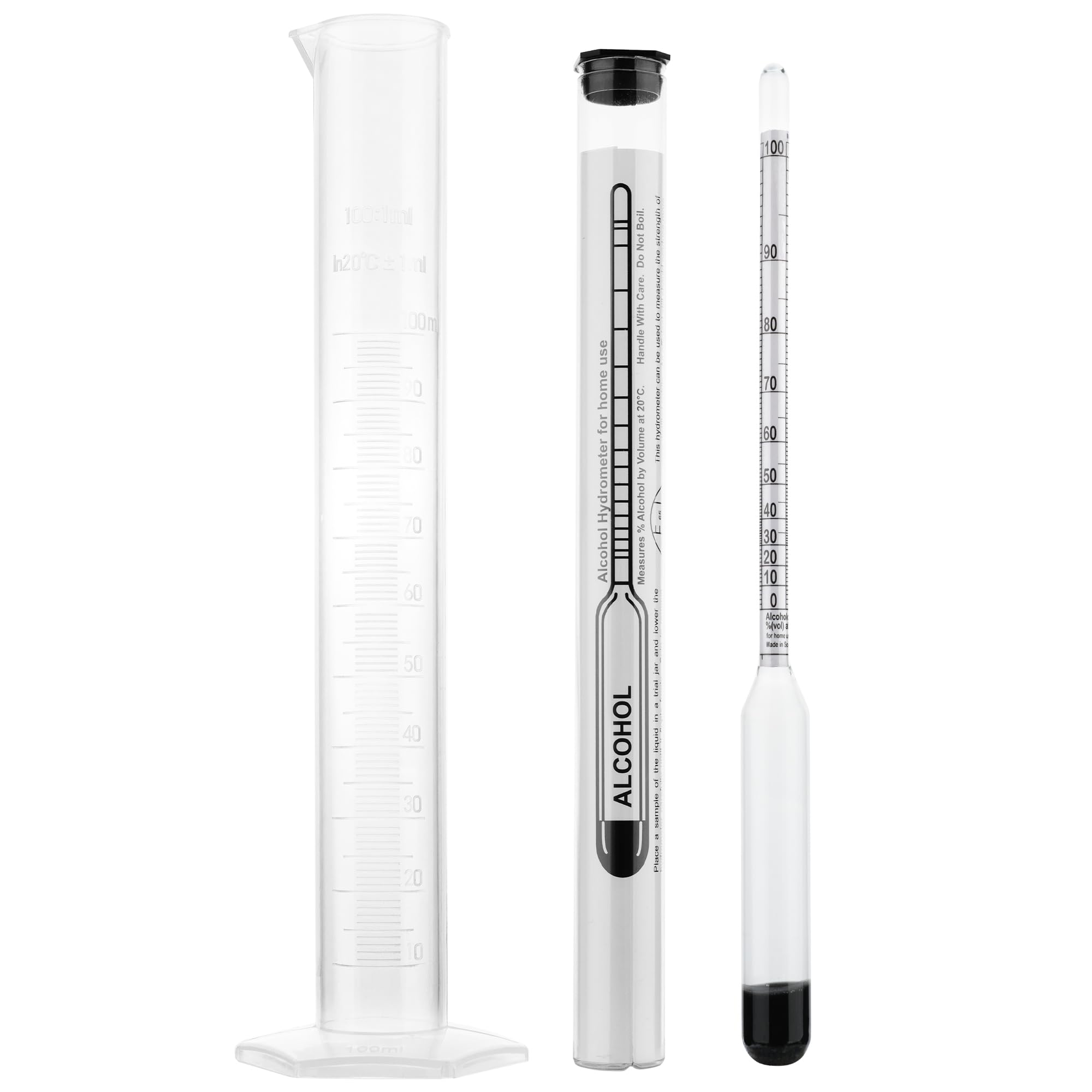
A glass hydrometer is one of the simplest tools in brewing and distilling but it’s also one of the easiest to contaminate. Whether you’re taking original gravity on a batch of beer, checking the progress of your fermentation, or measuring alcohol content in a wash, proper sanitation matters more than most people think.
Why Sanitizing Your Hydrometer Actually Matters
A lot of new brewers and distillers assume a Hydrometer doesn’t really need sanitizing because it only touches a small sample. But that sample still matters. Here's why:
1. Avoid Contaminating Your Batch
Even a single drop of contaminated wort or wash carried on your hydrometer can introduce:
- Contaminated yeasts
- Bacteria
- Mould spores
These can lead to off-flavours, stalled fermentation, or full-on spoilage.
2. Prevent Build-Up That Affects Accuracy
Sugars, oils, and film from previous readings cling to the glass. This changes the hydrometer’s buoyancy and skews readings, sometimes this can effect readings significantly.
3. Stop Cross-Contamination Between Batches
If you’re brewing or distilling multiple times in a week, moving from one sample to another without sanitizing introduces a high risk of unwanted microbes.
When You Should Sanitize Your Hydrometer
Hydrometer sanitation isn’t a once-in-a-blue-moon task. It’s something you should build into your brewing or distilling routine.
· Before every reading: Even if it looks spotless, sanitize it. Invisible films and dust can still introduce issues.
· After every reading: This prevents sticky sugars from drying on the glass and makes next time faster and easier.
· If your test jar wasn’t sanitized: It doesn’t matter how clean the hydrometer is if you drop it into a dirty vessel.
· Before long-term storage: Residual sugars attract mould over time.
How to Sanitize (Sterilize) a Glass Hydrometer
Recommended sanitizers:
- Chemisan
- Iodophor solutions
- Sodium metabisulfite
Method 1: Fast Spray Sanitizing (Quickest)
- Mix Star San/Chemisan according to instructions (usually 1.5 mL per litre).
- Spray the hydrometer thoroughly.
- Let sit for 30 seconds.
- Use immediately—no rinsing required.
Method 2: Full Soak (Most Thorough)
- Fill a tall jar or container with chosen sanitizer (Diluted following Instructions)
- Submerge the hydrometer fully.
- Leave it to soak for 1–2 minutes.
- Remove and shake off excess solution.
A Note on Hot Water
Hydrometers are fragile instruments.
Never use boiling or near-boiling water.
Thermal shock can crack the glass without warning. Warm water is fine for rinsing, but it’s not a sanitizing method.
Tips for Keeping Your Hydrometer Accurate
- Handle it by the stem, not the bulb
- Never wipe the hydrometer with a cloth before use. Lint and microfibres cling and mess with buoyancy.
- Store it in a sanitized tube.
- Check for cracks before each use, even small cracks can hold onto residue.
Final Thoughts
A hydrometer is a simple tool, but it is very important in the accuracy and predictability of your brewing process. Sanitizing it takes less than a minute and helps protect your product, your equipment, and keeps your results in check.
A clean hydrometer means clean readings means clean fermentation.